
President Luiz Inácio Lula da Silva has committed to vetoing legislation that would substantially reduce sentences for those convicted in Brazil’s attempted coup. The bill passed through both congressional chambers this week, with final senate approval on Wednesday. Former President Jair Bolsonaro, serving more than 27 years for orchestrating the coup attempt, would see his sentence dramatically reduced under the legislation.
Lula addressed the issue directly when speaking with journalists, emphasizing that individuals who commit crimes against democracy must be held accountable. He acknowledged the political dynamics that could lead to a veto override by the conservative-majority congress. This realistic assessment reflects the complex balance of power between Brazil’s governmental branches.
The practical impact of the legislation would be significant, with legal analysts calculating that Bolsonaro’s required time in maximum-security detention could fall from six years to approximately two years. This reduction is achieved through a mechanism that consolidates related criminal charges while applying only the penalty for the most serious offense. Standard programs for earning sentence reductions would remain available.
The former president’s current detention conditions include a specialized cell at federal police headquarters, where enhanced security measures accommodate his status. Legal representatives are pursuing authorization for medical procedures, specifically hernia surgery that they argue is necessary. The family’s public statements have characterized the legislation as an acceptable compromise despite falling short of complete amnesty.
The bill affects a wide range of convicted individuals, including military officers who participated in the coup attempt and civilians involved in violent attacks on government institutions. This comprehensive application has sparked concern among democracy advocates who viewed the original convictions as a watershed moment. Recent polling shows that most Brazilians oppose reducing these sentences, revealing tension between legislative action and popular sentiment that could influence future political dynamics.
Democratic Accountability Crisis Emerges in Brazilian Politics
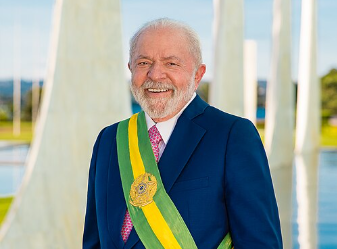
Photo by Planalto Palace from Brasilia, Brazil, via wikimedia commons
81