
The numbers tell a stark story. The UN, European Union, and World Bank jointly estimate that rebuilding Gaza will cost approximately $70 billion. Trump’s Board of Peace has claimed pledges of $5 billion from member countries — a figure that has not been publicly documented. Even if that number is accurate, it leaves a gap of $65 billion between what has been promised and what experts say is needed.
That financial reality is just one dimension of the reconstruction challenge facing the board as it convened its first meeting Thursday in Washington. Physical rebuilding cannot begin until Gaza is demilitarized, and demilitarization requires Hamas’s disarmament — which has not occurred. Israeli Prime Minister Netanyahu has explicitly said there will be no reconstruction until Hamas fully disarms.
Jared Kushner presented a vision at Davos of a reconstructed Gaza with coastal tourism, data centers, and industrial zones — a transformed territory completed within three years. But UN forecasters have said that clearing rubble and demining alone would take far longer than three years, before a single new building could be erected.
The human dimension of this timeline is profound. Approximately two million Palestinians are living in a devastated territory while these timelines are debated. The humanitarian situation is dire. Aid deliveries have increased under the ceasefire, but the scale of need vastly exceeds the capacity of current delivery mechanisms.
Trump’s Board of Peace must close the gap between grand vision and operational reality — and it must do so in a political environment where Hamas hasn’t disarmed, international forces haven’t deployed, the transitional governance committee is stuck in Egypt, and key US allies have declined to participate. The $70 billion question is only the most visible of many that the board must answer.
Trump’s $70 Billion Problem: Rebuilding Gaza Is Far Harder Than It Looks
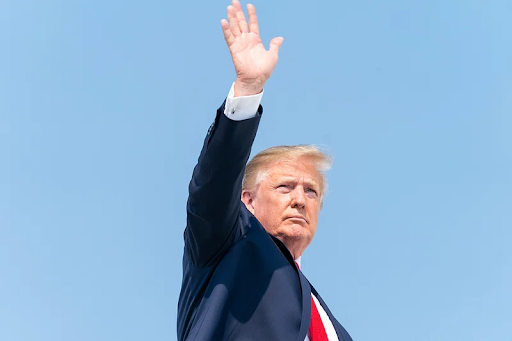
Picture Credit: www.rawpixel.com
80