
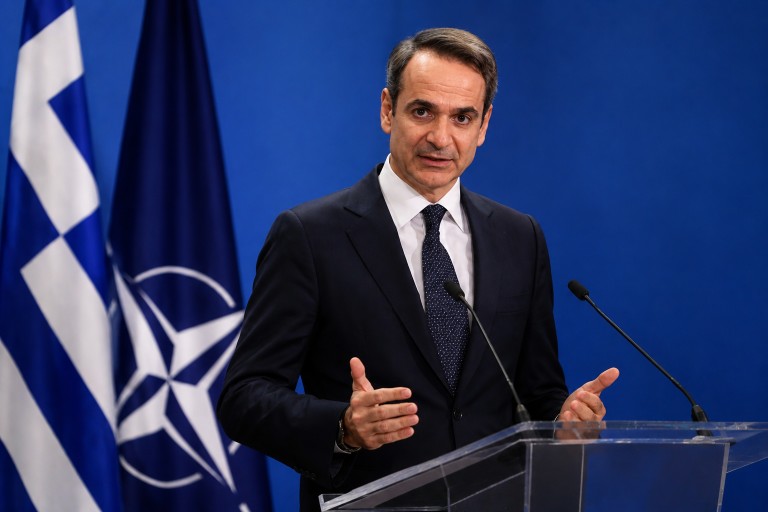
On the eve of a NATO summit in Ankara, Greek Prime Minister Kyriakos Mitsotakis refrained from directly addressing the possibility of the United States resuming sales of F-35 fighter jets to Türkiye. Instead, he emphasized the importance of NATO allies being mindful of regional security issues. Mitsotakis underscored Greece’s commitment to fostering better relations with Türkiye through dialogue and cooperation, highlighting the necessity for NATO to consider the security concerns of all member countries amid ongoing regional disputes.
These remarks came in response to signals from U.S. President Donald Trump, indicating that Washington might be contemplating lifting restrictions on defense cooperation with Türkiye. This includes the potential sale of F-35 fighter jets and easing sanctions imposed under the Countering America’s Adversaries Through Sanctions Act (CAATSA). The prospect of such a move has brought renewed attention to the complex dynamics within NATO, particularly concerning the delicate balance of power in the region.
Despite diplomatic efforts aimed at improving bilateral ties, Greece and Türkiye continue to clash over significant issues, notably maritime boundaries and territorial disputes in the Aegean Sea and Eastern Mediterranean. These persistent disagreements remain central sources of tension between the two NATO allies, complicating efforts to achieve a stable and cooperative regional security environment.
Prime Minister Mitsotakis’s remarks highlight Greece’s cautious approach to the evolving defense relationship between the U.S. and Türkiye, reflecting broader concerns about maintaining equilibrium and stability in a region fraught with historical rivalries. As NATO allies convene, the challenge remains to reconcile these sensitive issues while promoting a unified stance on regional security and cooperation.