
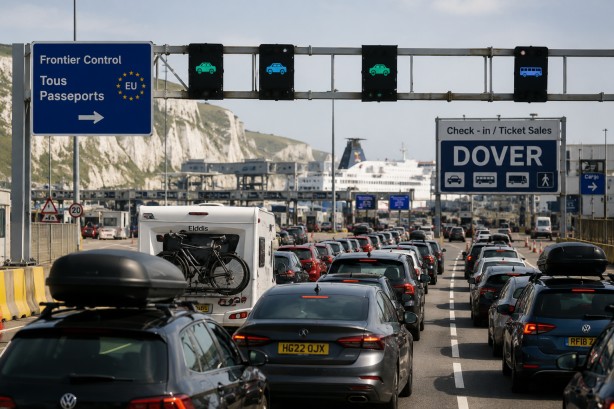
As the summer holiday season kicks off, the Port of Dover is gearing up for one of its busiest weekends. The start of school vacations in England and Wales is expected to bring thousands of vehicles through the port, sparking concerns about potential delays due to new European Union border procedures. The introduction of the EU’s Entry/Exit System (EES) requires French border officials to manually register non-EU travelers, a process that could lengthen waiting times.
The EES, which aims to enhance border security, has encountered technical delays that have pushed back the implementation of its automated processing facilities. Consequently, travelers will undergo manual registration, though this phase will not involve collecting biometric data like fingerprints and photographs. Despite this, the manual process is anticipated to slow down border crossings and may cause congestion at Dover.
In addition to the challenges at the port, motoring organizations have alerted travelers to expect heavy traffic across the UK’s road network. Major routes, especially those around London and heading to the southwest, are likely to be particularly congested as millions embark on summer trips. Many holidaymakers are choosing to travel within the UK, influenced by favorable weather, worries about flight disruptions, and increasing travel costs.
To mitigate potential delays, the Port of Dover has advised passengers to stick to designated routes and not to arrive more than two hours before their ferry departure time. This guidance comes amid broader travel warnings from airports and airlines, who are also preparing for the peak holiday season and have advised passengers to brace for possible delays.