
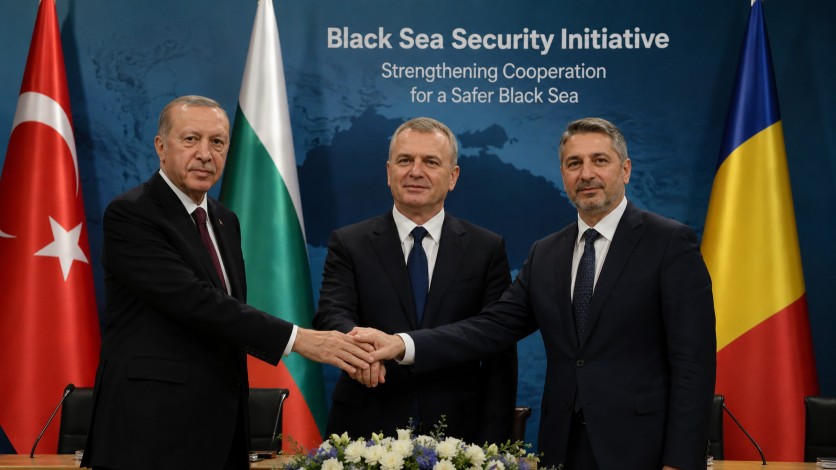
During a NATO summit held in Ankara, Türkiye, Bulgaria, and Romania have taken a significant step to bolster their regional security by signing a new memorandum aimed at expanding their collaborative Black Sea mission. Initially focused on clearing naval mines, the task force’s role will now extend to safeguarding critical infrastructure, such as energy facilities, telecommunications networks, and undersea pipelines. This move underscores the trio’s commitment to enhancing security measures in the face of growing regional threats.
The trilateral mission was originally established in response to the heightened security risks following the Russia-Ukraine conflict, which posed new challenges in the Black Sea region. Since its inception, the joint task force has successfully neutralized over 150 drifting naval mines, significantly contributing to maritime safety and the protection of regional trade routes. This expanded mission is expected to further stabilize the area by securing essential infrastructure.
The new agreement is particularly crucial given the strategic importance of the Black Sea, where all three countries are actively involved in significant gas exploration and production activities. By extending their cooperation to cover critical infrastructure, Türkiye, Bulgaria, and Romania aim to not only protect these vital energy projects but also ensure the uninterrupted flow of resources essential for their economies.
Beyond mere naval security, this initiative highlights a broader strategy to safeguard strategic assets that are pivotal for regional stability. The enhanced cooperation among these nations reflects their shared resolve to address and preempt potential threats that could compromise their economic and security interests.
This memorandum serves as a testament to the ongoing collaboration between Türkiye, Bulgaria, and Romania in strengthening regional defenses. By proactively expanding their joint mission’s scope, the countries are setting a precedent for cooperative security efforts in an increasingly volatile geopolitical landscape.