
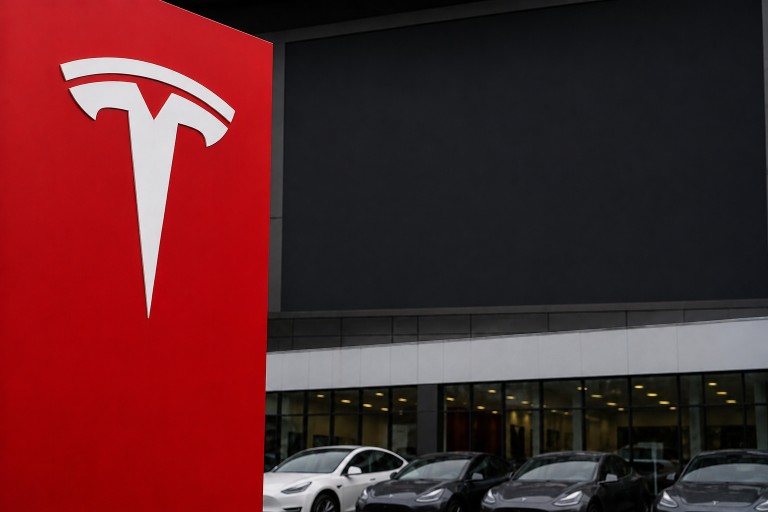
Tesla’s second-quarter earnings fell short of Wall Street’s expectations, with profits missing the mark despite revenue exceeding forecasts. This financial underperformance led to a drop in Tesla’s stock by more than 3% during after-hours trading. The electric vehicle giant reported earnings of 31 cents per share, falling short of the anticipated 51 cents per share. However, the company’s revenue rose to $28.23 billion, surpassing the estimated $25.71 billion.
So far this year, Tesla’s stock has experienced a decline of about 14%, as the company grapples with increasing competition from cost-effective Chinese electric vehicle manufacturers and the effects of the lapse of U.S. electric vehicle tax incentives. Amid these challenges, Tesla is broadening its focus beyond vehicle sales, venturing into artificial intelligence, robotics, autonomous driving, and the development of its Robotaxi service.
CEO Elon Musk has highlighted the potential of the Optimus humanoid robot, suggesting it could emerge as Tesla’s flagship product in the future. However, he noted that significant technical and manufacturing hurdles must be overcome before the robot can be produced on a large scale.
Tesla is also actively expanding its Robotaxi service, now including operations in Tampa and Orlando. The autonomous ride-hailing service is already available in select areas of Austin, Dallas, Houston, and Miami. Musk emphasized the cautious approach in the Robotaxi rollout, prioritizing safety to prevent incidents that might attract regulatory scrutiny.
Currently, about 50 Robotaxis are in operation in Austin, where the service was initially launched. As Tesla continues to navigate financial challenges and expand its technological innovations, the company remains committed to advancing its vision for the future of transportation.