
Oil prices saw a sharp decline on Tuesday, ending a day of extreme fluctuations after Donald Trump commented on the state of the US-Israel-Iran war. After Brent crude hit $119.50, the President’s statement that the war was “very complete” helped bring the price down to $91.58. However, the President’s subsequent social media posts warned of even greater strikes if Iran interferes with global oil supplies.
The primary concern for the market has been the Strait of Hormuz, where nearly a fifth of the world’s oil and gas tankers pass through. The passage has been effectively closed for a week, leading to one of the most significant energy supply crises since the start of the Ukraine war. Iran had vowed to stop all regional oil exports if the attacks against it did not cease immediately.
To address the resulting shortages, Trump has hinted at a new policy of waiving oil-related sanctions. This announcement came shortly after a conversation with Vladimir Putin and follows a shift that allowed Indian refiners to buy Russian crude. Trump argued that these moves are necessary to keep the global economy moving while the primary trade routes are contested.
The spike in energy prices has caused widespread disruption, forcing many nations to adopt emergency fuel-saving measures. Bangladesh has moved up its Eid al-Fitr holidays and closed universities, while Thailand and South Korea have placed caps on the price of fuel. These actions underscore the urgent need for a resolution to the conflict in the Middle East.
Looking forward, the focus will be on the safety of international shipping lanes. French President Emmanuel Macron has suggested that several countries could deploy naval vessels to escort tankers through the region once the most intense phase of the war is over. Such an international effort would be vital to maintaining the recent drop in oil prices and preventing future volatility.
Trump Balances Reassurance with Threats as Oil Prices Volatility Continues
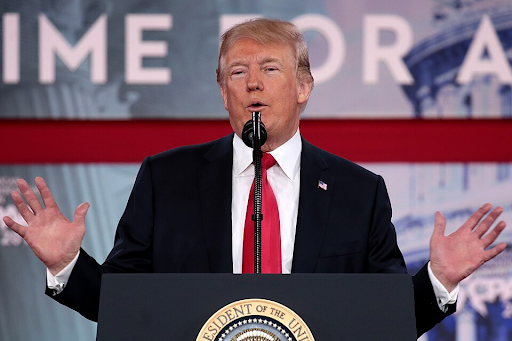
Photo by Gage Skidmore / Wikimedia Commons (CC BY-SA 2.0)
76