
The United States has given official approval for Taiwan to acquire an advanced missile defense system valued at approximately $700 million, technology that has proven its worth defending Ukraine against Russian aerial attacks. This substantial military package represents the second major arms deal for Taiwan announced within a single week, bringing the combined total of recent weapons sales to around $1 billion. The decision reflects Washington’s steadfast commitment to enhancing Taiwan’s ability to defend itself in an increasingly challenging regional security environment.
Designated as the National Advanced Surface-to-Air Missile System, this medium-range air defense solution manufactured by RTX will provide Taiwan with capabilities that currently only two other Indo-Pacific nations possess: Australia and Indonesia. The agreement calls for the delivery of three complete NASAMS units, representing a portion of a broader $2 billion military sales arrangement that the United States government announced during the previous year. According to the Pentagon’s official statement, defense contractor RTX has been granted a firm fixed-price contract to procure and deliver these systems, with the entire project timeline extending through February 2031, and the full cost of $698.9 million being covered by fiscal 2026 foreign military sales funds allocated specifically for Taiwan’s defense needs.
The NASAMS platform has distinguished itself through its operational deployment in Ukraine, where it has successfully intercepted aerial threats during the Russian invasion, providing irrefutable evidence of its combat effectiveness. This real-world performance has driven increased international demand for the system as nations seek proven defensive technologies. Raymond Greene, functioning as the de facto United States ambassador in Taipei due to the absence of official diplomatic relations, addressed business leaders at an American Chamber of Commerce function, where he declared that America’s commitments to Taiwan are absolutely unwavering. He emphasized that Washington is backing up its rhetorical support with tangible actions, particularly through growing cooperation in defense industrial matters, all designed to support Taiwan’s strategy of maintaining peace through demonstrated military capability.
This latest approval follows another significant weapons sale authorized last Thursday, when the United States sanctioned the transfer of $330 million in fighter jet components and aircraft parts to Taiwan. That deal marked the first major arms package approved under the Trump administration since the president began his current term in January, generating thanks from Taipei and anger from Beijing. China continues to assert that Taiwan is part of its sovereign territory, a position that Taiwan’s democratically elected government categorically rejects. These arms sales are taking place amid deteriorating diplomatic relations that involve not just Beijing and Taipei but also Japan, as territorial disputes in the East China Sea add another layer of complexity to regional tensions.
Recent events have illustrated the precarious security situation surrounding Taiwan. Chinese coast guard vessels recently navigated through waters near islands in the East China Sea that are administered by Japan but claimed by China, creating diplomatic friction. Furthermore, Japanese military forces scrambled fighter aircraft in response to a Chinese drone that flew between Taiwan and Yonaguni, Japan’s westernmost island, in what was viewed as a provocative action. Taiwan’s Defense Minister Wellington Koo addressed these incidents by urging China to abandon force-based approaches to resolving disputes. Taiwan is pursuing an extensive military modernization effort that includes developing indigenous submarine capabilities to safeguard the maritime trade routes that are vital to the island’s economic prosperity. Chinese military forces conduct operations near Taiwan on an almost daily basis, employing what Taipei describes as “grey zone” tactics designed to test Taiwan’s defenses and exhaust its military resources. Although the United States and Taiwan do not maintain formal diplomatic ties, American law mandates that Washington provide Taiwan with the means necessary for self-defense, a requirement that continues to be a source of friction between the United States and China.
Taiwan to Receive Battle-Tested $700M Missile Defense System in Major US Security Boost
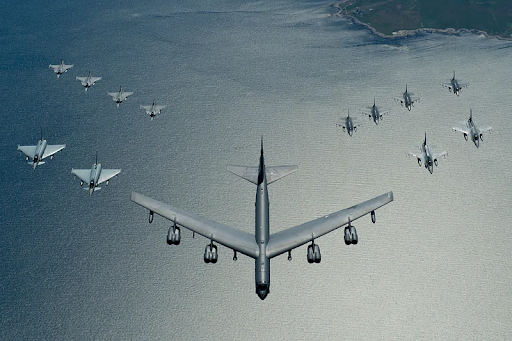
Picture credit: www.rawpixel.com
59