
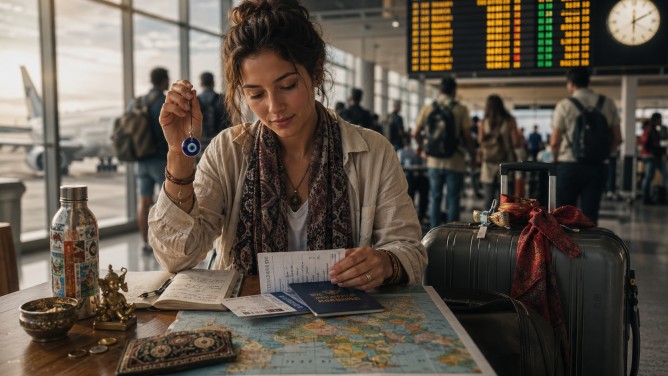
The excitement of travel often comes with a set of unique customs and rituals that are cherished across various cultures. These traditions, though diverse, share a common goal: to usher in good luck and protection for those embarking on a journey. From Europe to Asia, travelers adhere to these age-old superstitions to ensure a safe and prosperous trip.
In the Balkans, a simple clove of garlic is believed to ward off negative energy. Travelers often tuck one into their luggage, trusting it will safeguard them against misfortune. Meanwhile, a different kind of ritual takes place at the threshold of an airplane. Many travelers find comfort and luck in touching or tapping the exterior of a plane before boarding, a gesture that also helps ease the anxiety of flying. Similarly, stepping onto the aircraft with the right foot first is seen by some as an auspicious start, ensuring a successful journey.
Water, too, plays a significant role in travel superstitions. In certain parts of the Middle East and the Balkans, families may pour or sprinkle water behind a departing traveler. The flowing water is symbolic of a smooth and uneventful trip, with the added hope of a safe return. Numbers, with their varied cultural meanings, also influence travel practices. The superstition surrounding the number 13 is well-known in Western cultures, while in China, the number 4 is avoided due to its phonetic similarity to the word for death. Italy, on the other hand, harbors an aversion to the number 17.
Travelers from Slavic regions embrace the custom of sitting quietly on their packed luggage before departure. This moment of stillness is thought to help them mentally prepare for the journey ahead. In some cultures, it’s deemed unlucky to sweep the floor immediately after a traveler has left, as doing so might symbolically sweep away the person’s good fortune or disrupt their safe return.
While these beliefs lack scientific backing, they continue to be an intriguing element of travel culture. For many, these rituals are not so much about testing their efficacy but rather about honoring family traditions, maintaining cultural identity, and celebrating the anticipation of new adventures.